Mistakes are conversations
Say it wrong and Yuki tilts her head: 「駅…で?」 You fix it the way you would in real life, and nothing is lost.

A cozy life-sim in a small Japanese town. Your language fades as you learn.
The game
You've joined a community programme and rented the upstairs room in the house of Mori Hanae, a 72-year-old widow. The town has a station older than anyone living, a sleepy shopping street, a shrine on the hill and the sea beyond the rice fields.
Everyone here speaks Japanese. You don't, yet. Help Sōta find the cat, buy Hanae's eggs at the konbini, draw your fortune at the shrine. Every errand needs a little Japanese, and every word you learn opens the town a little more.
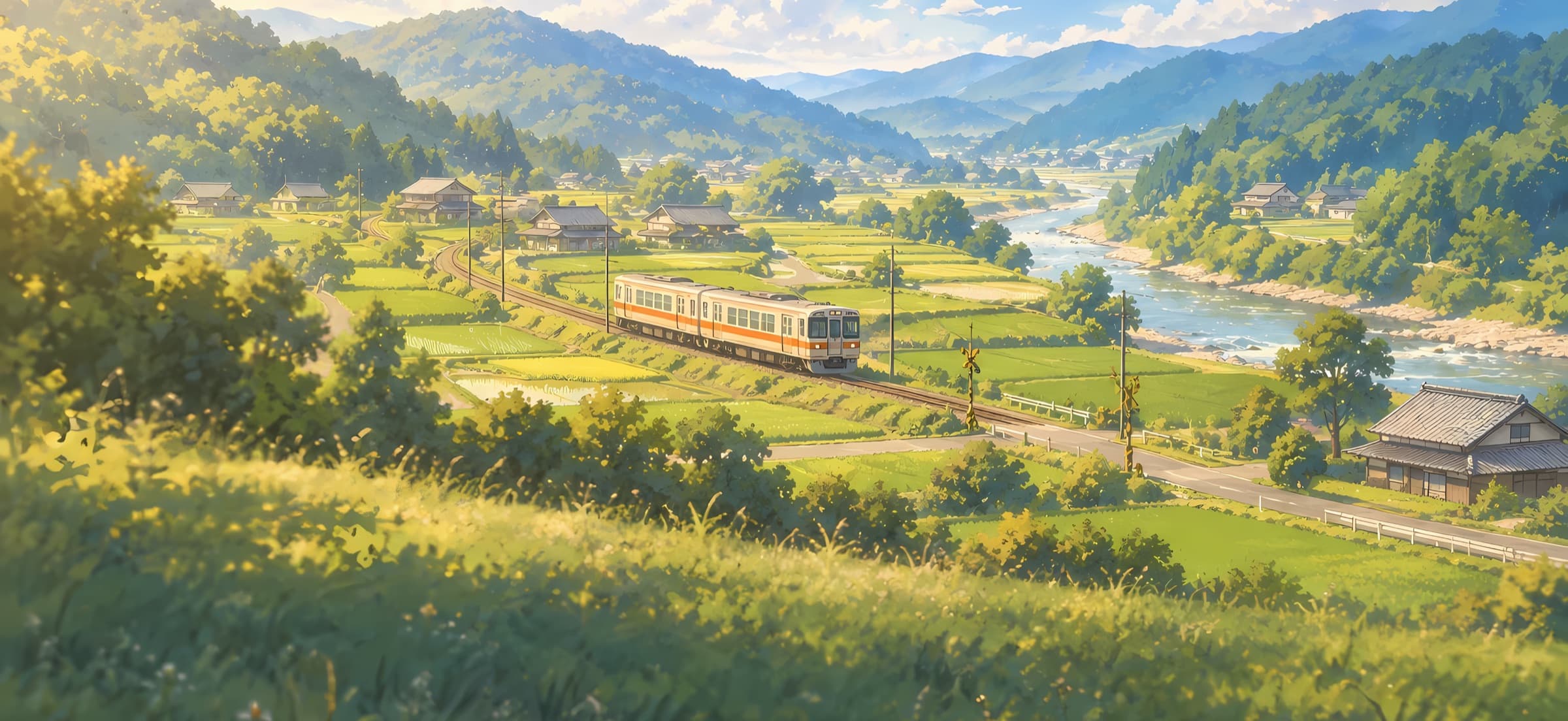
How it plays
You walk the town, meet people, learn a few words from them, and use those words right away, in the moment that needed them.
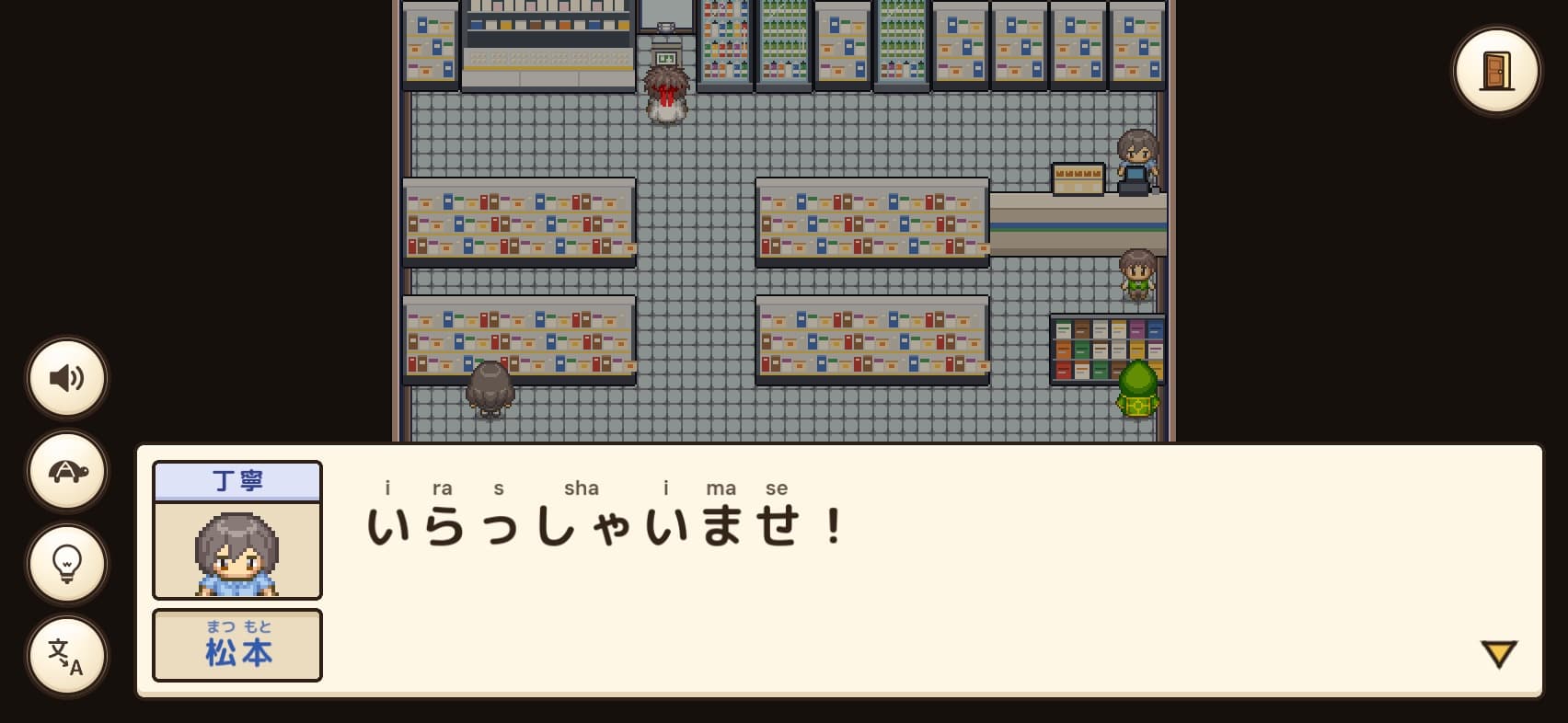
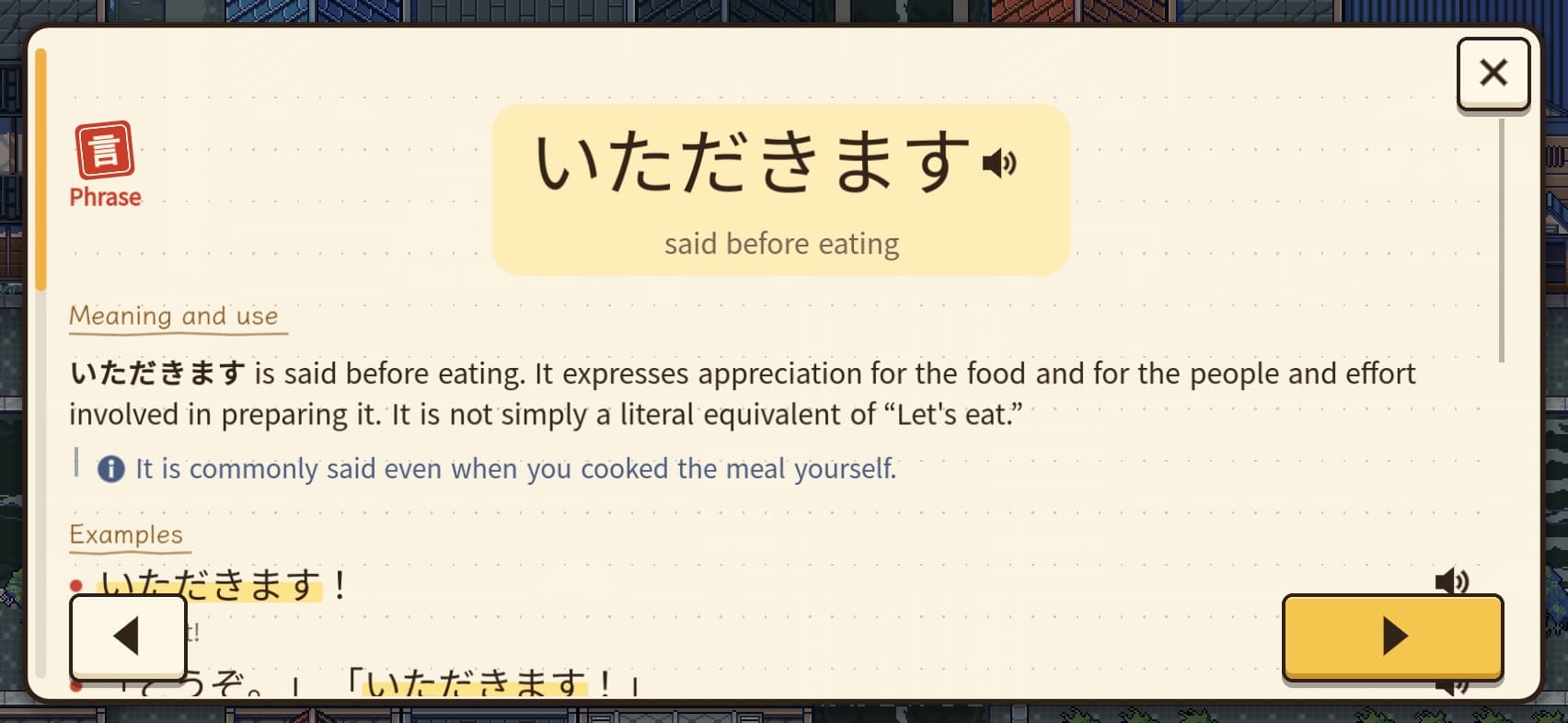
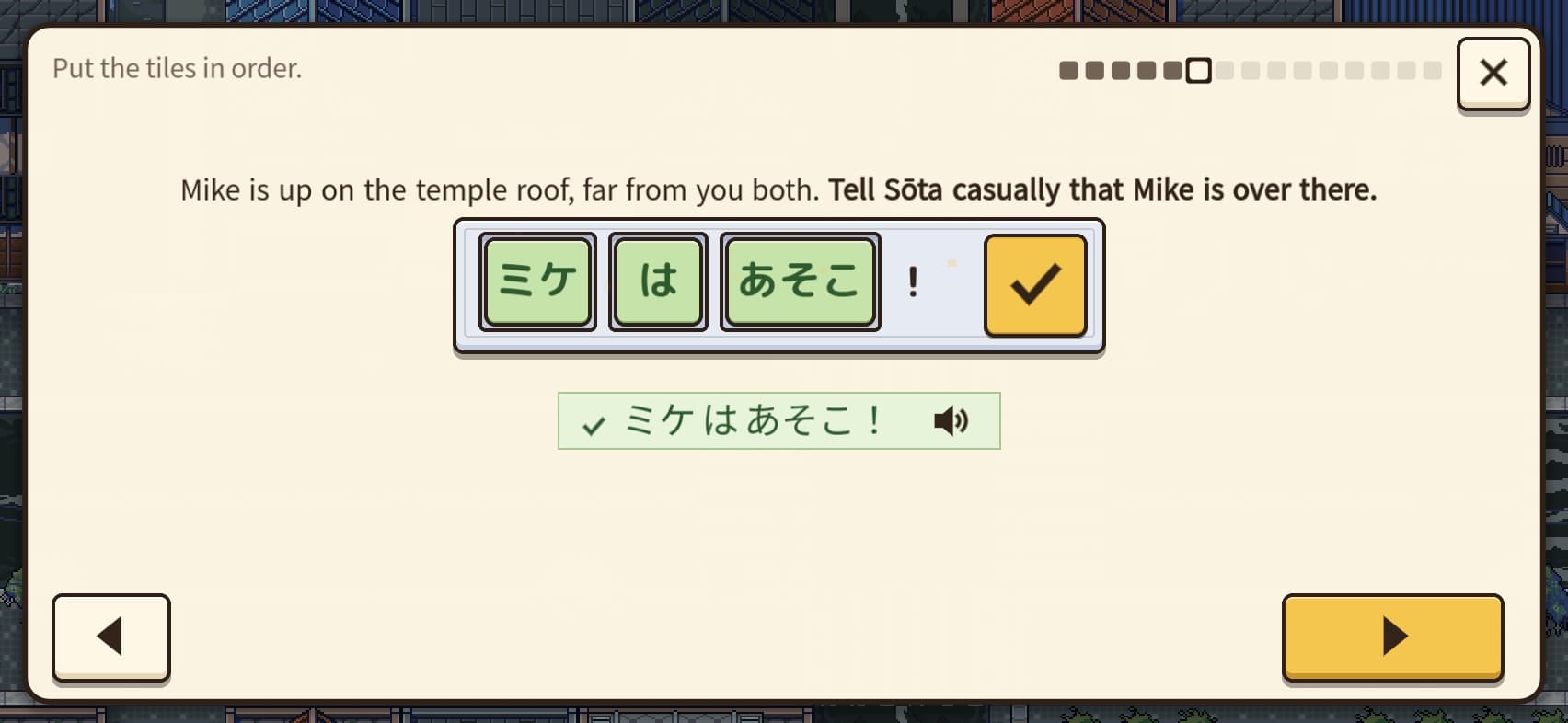
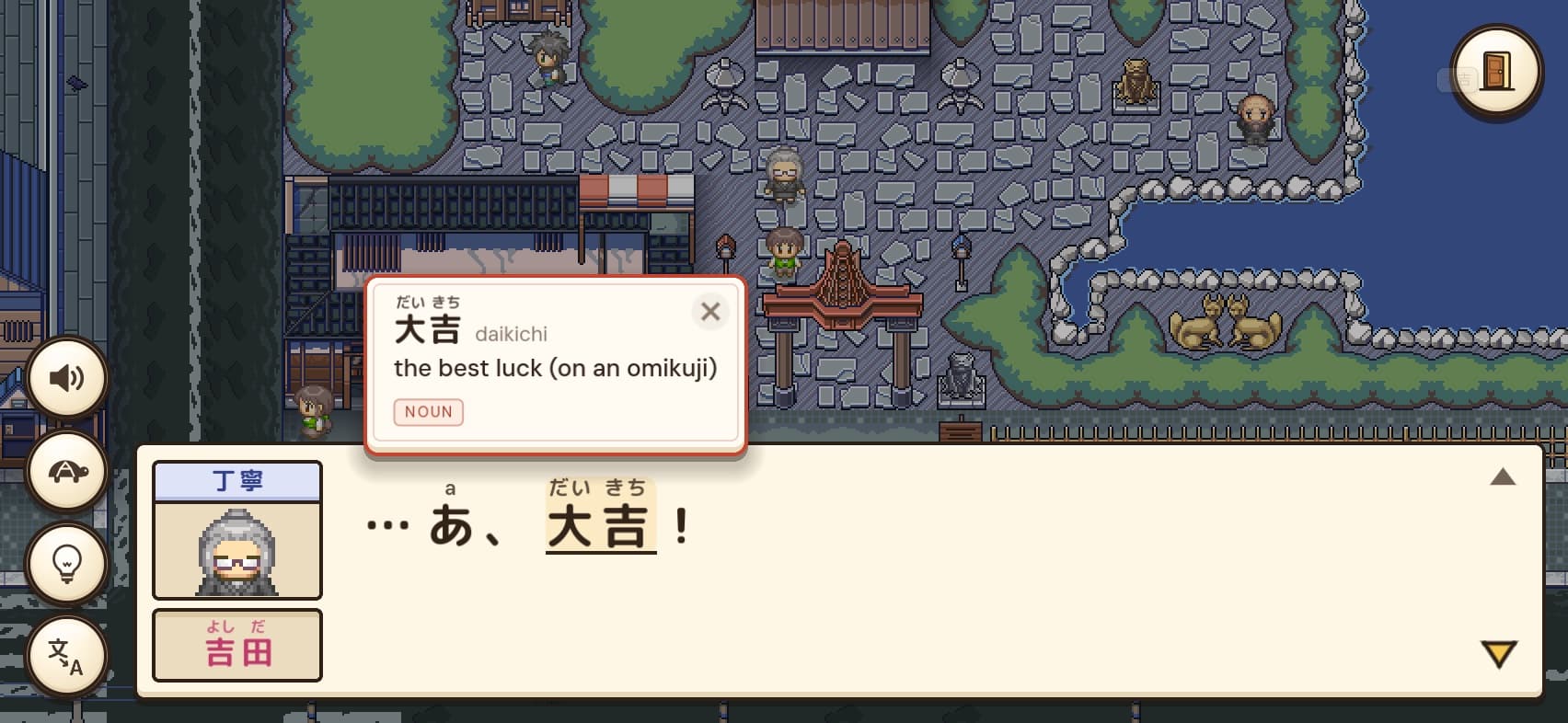
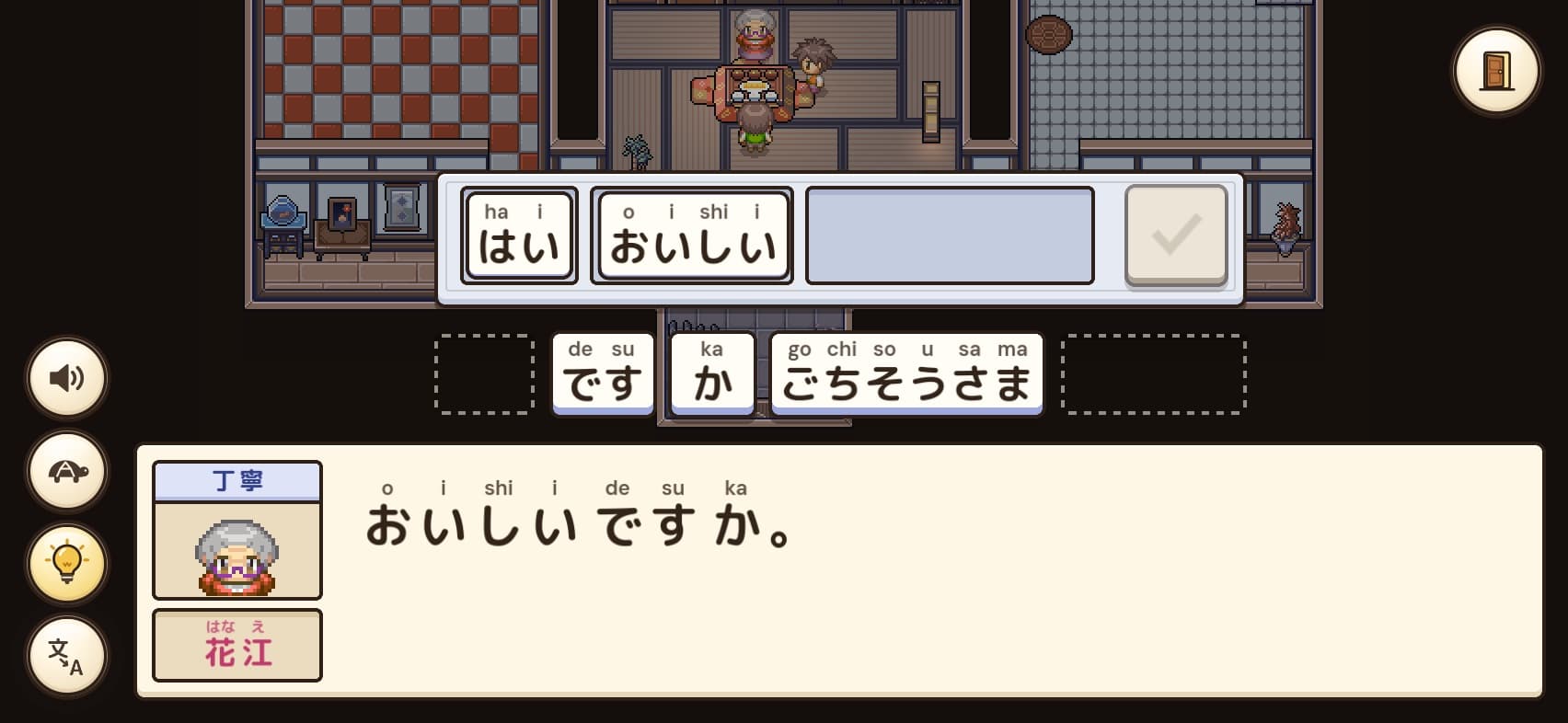
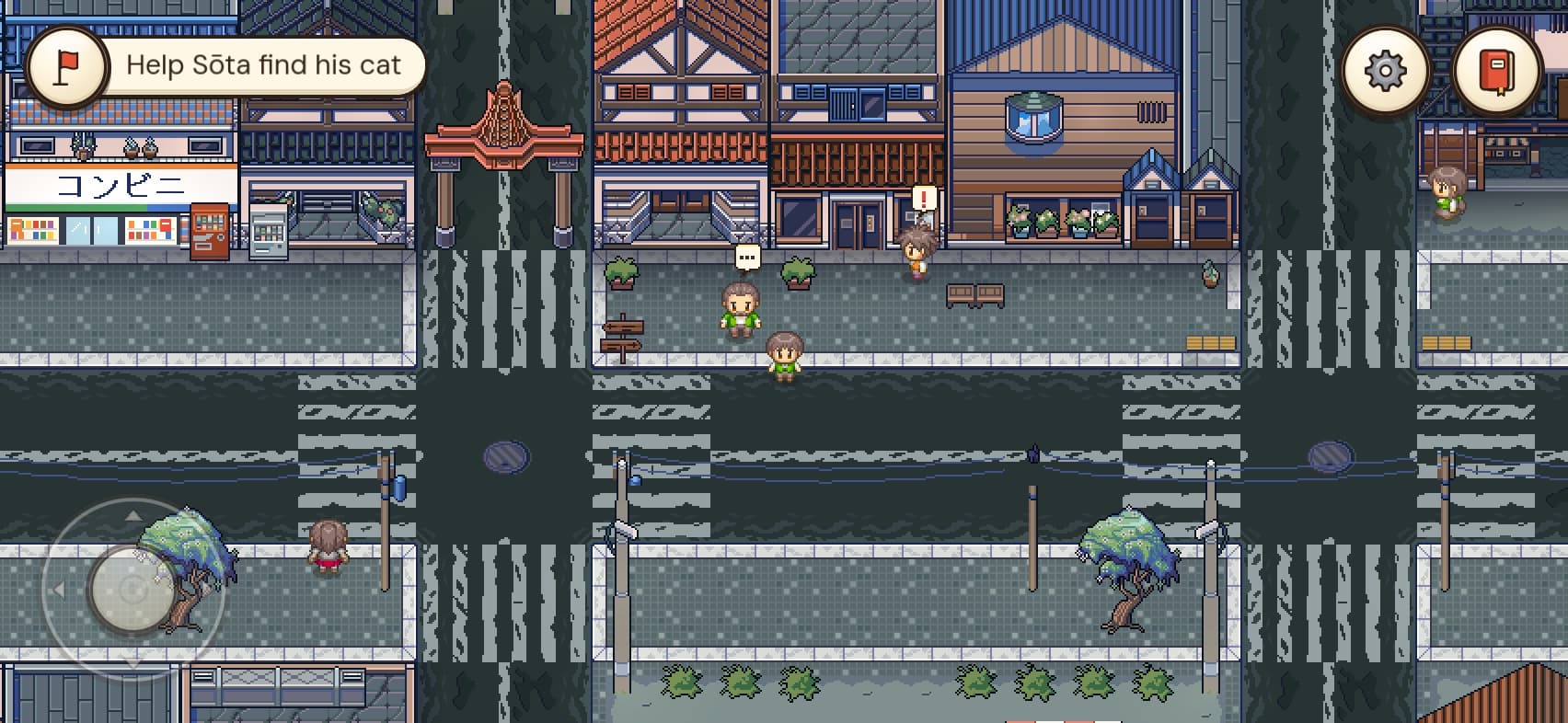
Screenshots from the current build, iPhone landscape.
The heart of it
Most apps switch you to Japanese by level. Hidamari watches each word. Once you've shown you understand one, people stop translating it, and it stays in Japanese from then on.
You won't notice the day it happens. You'll just realise you've stopped reading your own language.
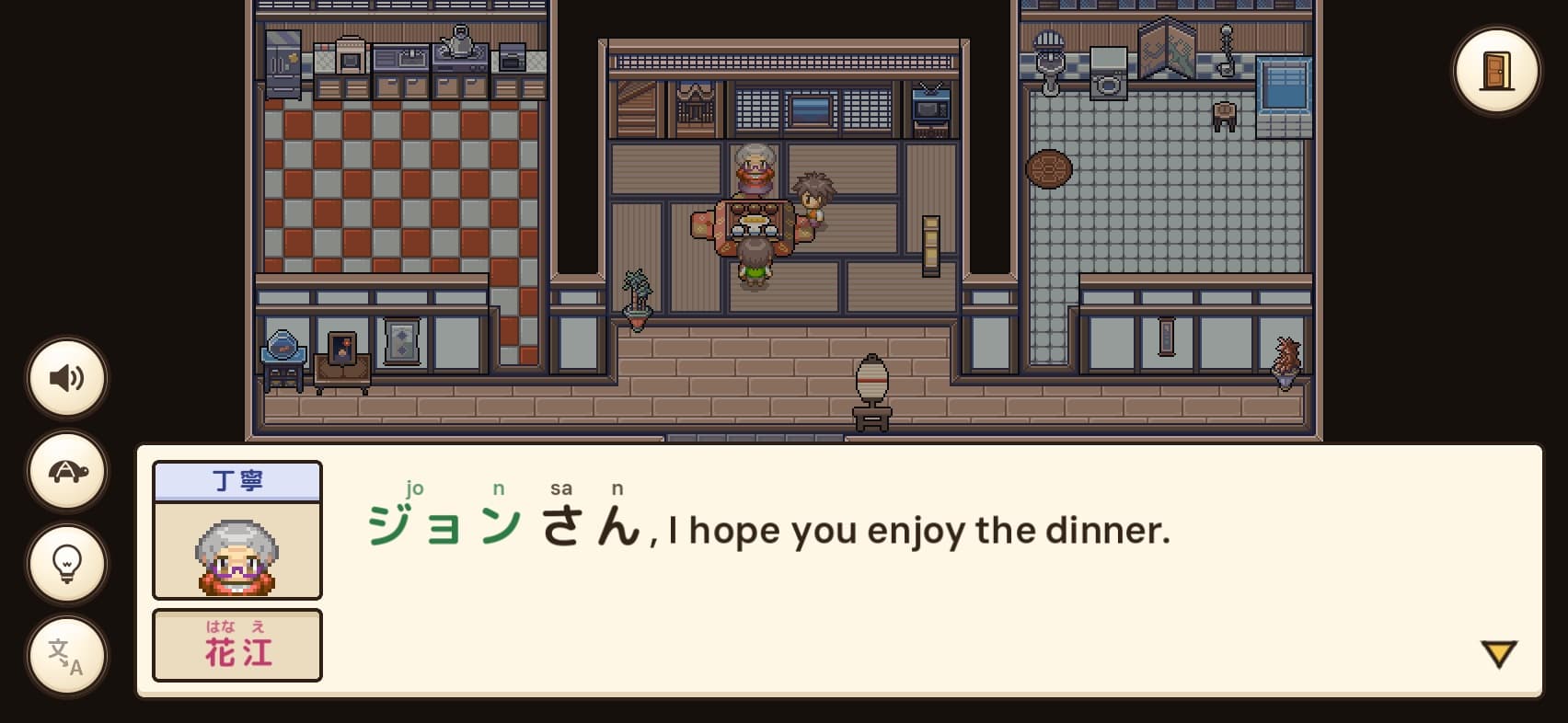
Welcome to Hidamari! The station is over there.
The method
Hidamari doesn't teach you Japanese first and let you play later. Every word you learn goes through the same six steps, each one built on what research shows about how adults learn a language.
In the game
Something in town needs a word: Sōta's cat has run off, the konbini clerk is waiting for your order, Hanae asks if dinner is good.
Why it works
Attention follows need. A word you needed to get something done is noticed, and a word you noticed is remembered.
In the game
You meet the word in a real moment, said by a person, with the scene around it to help you guess. Nobody explains it yet.
Why it works
Understanding comes before speaking. Hearing a word in a context you can follow is what builds it in your head; speaking too early only adds stress.
In the game
The person who needs you to know it gives a short lesson: what it means, how it's used, and examples you can hear.
Why it works
Adults learn faster with a clear explanation, and best when it names something they've just met. The lesson comes after the moment, never instead of it.
In the game
You answer, build the sentence from tiles, or act on what you heard. The scene narrows the choices; only the Japanese tells you which one is right.
Why it works
Pulling a word out of your memory strengthens it far more than reading it again. And when the scene can't give the answer away, every success is real understanding.
In the game
Days later the word returns somewhere new: on a sign, in a text from Yuki, in a station announcement, just before you'd forget it.
Why it works
Spaced repetition is one of the most reliable findings in memory research. A modern memory model times each return, so you review without ever opening a flashcard.
In the game
Once you've shown you understand a word, nobody translates it for you again. Little by little the town speaks only Japanese.
Why it works
Support that fades as your skill grows keeps the challenge just above your level, where learning happens. You're never thrown in the deep end, and never held back.
Then the next word begins its own journey, often in a scene you already know.
Say it wrong and Yuki tilts her head: 「駅…で?」 You fix it the way you would in real life, and nothing is lost.
Words, kanji and grammar follow the order of the major beginner textbooks, from your first hiragana to JLPT N3. Use it on its own or next to your class.
The story
On your first night, you find an old letter in your room, addressed to whoever lives there. You can pick out a few words. The rest is a blur.
Every word you learn makes it a little sharper. By the end of your two years in town, you'll read all of it, and find out who wrote it.
この部屋に住む人へ
はじめまして。この手紙を見つけてくれて、ありがとう。
わたしも、むかし、ここに住んでいました。
春になると、駅の前の桜が、とてもきれいです。
いつか、いっしょに見られたら……
From zero to JLPT N3
You start knowing nothing. Step by step the town asks more of you, and the Japanese grows with it, all the way to the level where you can read real books, games and shows on your own.
The levels follow the JLPT, the test most learners use to measure their Japanese. The game teaches the words, kanji and grammar of each level as the story needs them.
Download
Download Hidamari and play your whole first day in town. If you want to stay, one purchase unlocks the rest of the story.
Coming soon to
iPhone and iPad · Android phones and tablets · Windows, Mac and Linux · Steam Deck. More platforms to follow.
Leave your email and we'll write when the free demo is out, and when a new part of the story arrives. Nothing else.
Questions
No. Hidamari starts from zero. Your first words come from a notebook before you even leave home, and the game teaches hiragana and katakana as you go.
English, Portuguese (Brazil), Spanish (Latin America), French and German. The Japanese is the same in every version; only the language around it changes, and it fades as you learn.
The full story runs from your first word to about JLPT N3. That's enough to start reading real Japanese, like manga, games and simple novels, with a dictionary at your side.
Yes. The words, kanji and grammar follow the same order as the most common beginner textbooks, so the game gives you a place to use what your class teaches.
No. Everything runs on your device. There's no account, no tracking and no ads, and nothing is sent anywhere.
Every line is written by hand and checked by people, never generated. People talk the way they would in a real small town: polite with you at first, more casual as you become friends.
iPhone and iPad, Android phones and tablets, and Windows, Mac and Linux through Steam, Steam Deck included. More platforms will follow. Each store sells its own copy, so a purchase on one store doesn't unlock another; your save can move between devices.